
Learn · Exposure
The Exposure Triangle.
This is a tool that helps to illustrate how ISO, Aperture and Shutter Speed work together.
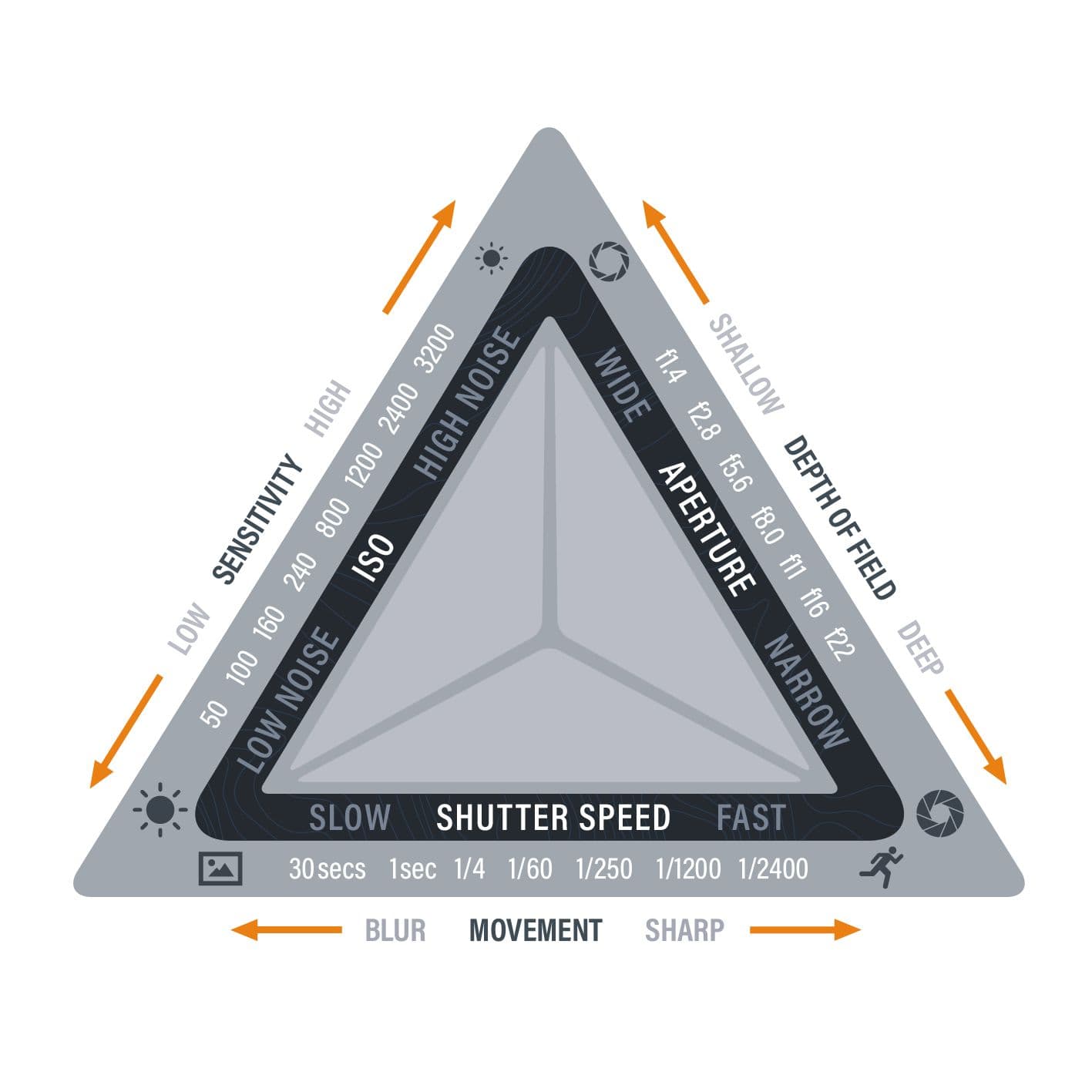
The more you learn about what is happening when your camera captures an image, the more creative a photographer you can become. Balancing how the camera, as a recording device, receives light determines how your image will look. There are, of course, infinite variables in an uncontrolled lighting environment and seemingly endless limitations and compromises to be made at every step of the process, but that is where the challenge and the fun lies.
ISO is the term that relates to the sensitivity of the sensor recording the image. Each sensor has an optimal ISO setting that results in the cleanest and highest-quality image the equipment can record (usually its base number). Increasing the ISO above that optimal setting effectively increases the sensor's sensitivity to light, allowing images to be captured in darker conditions or with faster shutter speeds. However, this comes at the cost of image quality, as the sensor produces more digital noise and reduced tonal detail. The higher the ISO setting, the more noticeable the loss in quality.
Aperture refers to the size of the opening formed by the diaphragm inside the camera lens, which determines how much light passes through the lens and onto the camera's sensor. The lower the f-stop, the more light is allowed to pass through the lens. The higher the f-stop, the less light passes through the lens. Each setting has its pros and cons, and the subject is almost a book in itself.
Shutter speed is the length of time the camera's shutter remains open, allowing light to pass through the lens and fall onto the sensor. This can range from a tiny fraction of a second to several minutes or even longer. The selected shutter speed will determine how your final image looks, depending on a multitude of factors, including the available light, the aperture, the ISO setting and the movement of both the subject and the camera.
Next